Minimize supply chain disruption

Unexpected fluctuations in supply and demand can be better managed with our working capital optimization solutions.

Man in building construction gear and helmet image

Businesses the world over are facing challenges
– including those who supply you

Unstable financial health

The financial health of your suppliers can pose a threat to your business. By providing easy and inexpensive access to capital, you can mitigate the chance of supplier insolvency.

Production meeting demand

A big order is a moment to be celebrated. Yet without sufficient capital, fulfilling the order can be an impossible task. Offering on-demand access to cash can help ensure your suppliers are able to fulfill your orders in full and on time.

Feeling the strain

The ‘just-in-time’ supply chain models are often stretched to a breaking point. SAP Taulia helps forge a middle path that shows long lead times or overstocking are not inevitable.
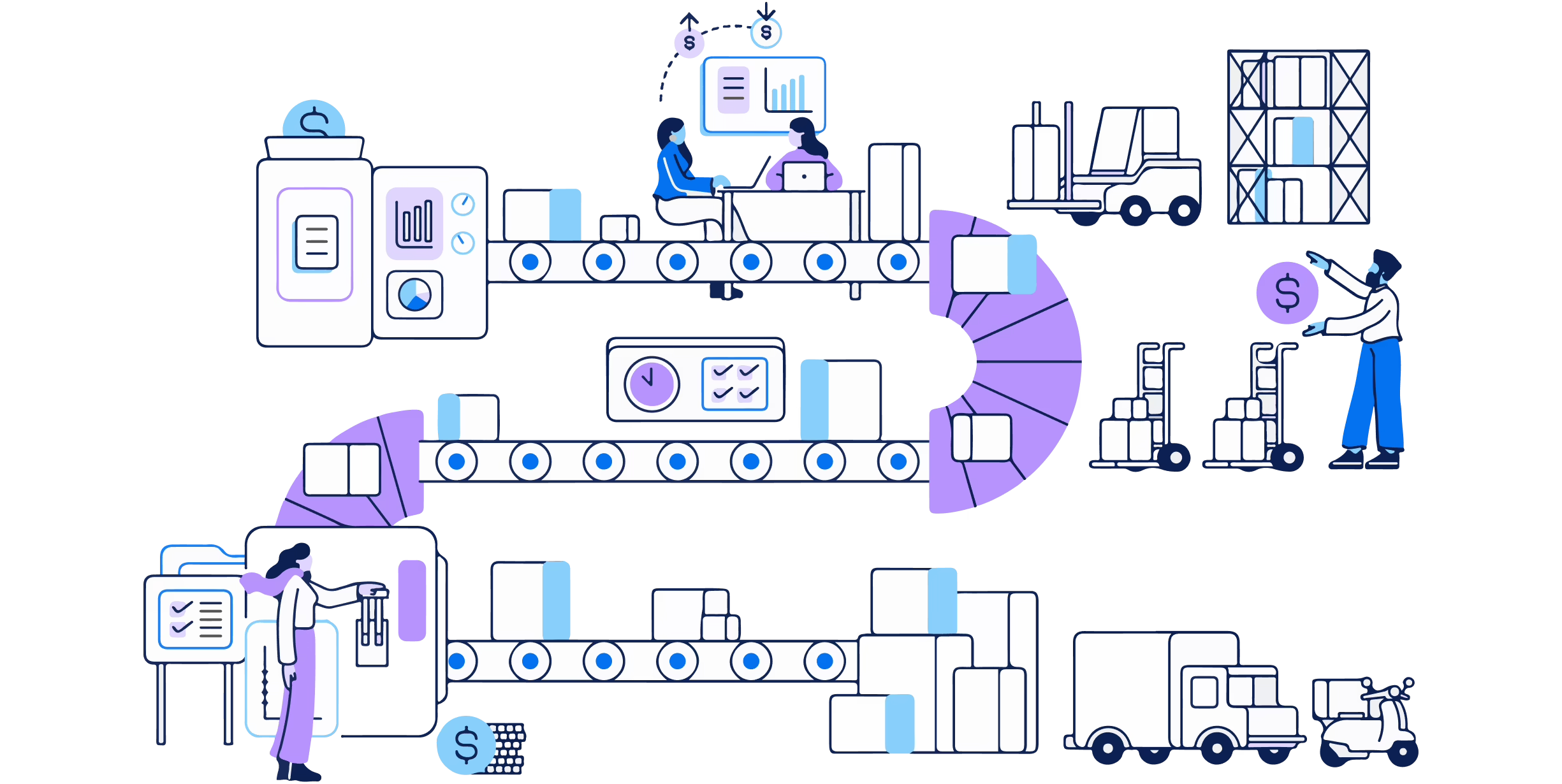
supply chain resilience large illustration image

Create a more resilient supply chain

payables white icon
Payables

At the click of a button, your suppliers can have invoices paid immediately instead of waiting for cash at a later date. With Dynamic Discounting, you use your own cash to make the payment and obtain a discount on the invoice. With Supply Chain Finance, a third-party funder makes the payment on your behalf, and your payment timing is unaffected.

inventory white icon
Inventory

Mitigate long lead times, stock outages, and production delays, and end the reluctance to hold consignment inventory. SAP Taulia Inventory provides cash preservation for you and your suppliers. SAP Taulia’s solution can help you improve your balance sheet position and that of your suppliers by owning goods in transit or at a nearby warehouse.

smiling woman on laptop full width image

Frequently Asked Questions

Summary Supply chain management (SCM) is the process businesses use to oversee the flow of goods, data, and payments across the supply chain. It encompasses planning, sourcing, manufacturing, delivery, and returns, ensuring each stage aligns with broader objectives, such as cost efficiency, resilience, and customer satisfaction. Connected data, supplier collaboration, and end-to-end visibility are critical…
Summary Inventory management encompasses sourcing, storing, and selling inventory, while tracking its movement through suppliers, production, sales, and stock on hand. Proper inventory management is essential for scaling sales, supporting consistent order fulfillment, and maintaining the right stock levels. It enables cost savings, improves supplier and business negotiations, reduces overselling risk, and enables data-driven decisions….
What is vendor management? Vendor management is a term that describes the processes organizations use to manage their suppliers, who are also known as vendors. Vendor management includes activities such as selecting vendors, negotiating contracts, controlling costs, reducing vendor-related risks and ensuring service delivery. The vendors used by a company will vary considerably depending on…
What is supplier relationship management? Supplier relationship management is the set of processes that organizations use to build, manage, and maintain relationships with their suppliers, or vendors. A supplier relationship management strategy is essential to ensure that relationships are built productively, with a view to increasing the overall effectiveness and resilience of the supply chain….

Learn more:

Unlock the power of cash

Accelerate your cash flow today.

construction image