
Blog
Expert Advice
8 min read
13 May 2026



Blog
Expert Advice
8 min read
13 May 2026
If you have ever walked out of a quarterly collections call with your CFO feeling like you are trying to stop a $100 million operating cash flow leak with a handful of sticky notes, you are not alone. We have all been there—usually two weeks before quarter-end, when “Wall Street guidance” starts to sound less like a target and more like an existential threat.
At SAP and SAP Taulia, we are working towards Autonomous Finance to show what happens when your treasury systems stop behaving like passive ledger tables and start acting like the elite, coordinated strategic team they were always meant to be.
To prove it, we’ll walk through a single, high-stakes morning in the life of Sarah, an AR and Treasury Manager at Meridian Energy Services. Here is how she solved a looming cash crisis before her first coffee got cold—and how the underlying AI agent architecture actually did the heavy lifting.
It is June 2026, exactly two weeks before quarter-end. Sarah’s CFO, Maria, drops a bomb: Meridian is projecting a $100 million Operating Cash Flow shortfall. If they cannot close it by Friday, they miss guidance. The catch? The board has mandated a strict constraint: no new debt on the balance sheet.
In the old world, Sarah would have buckled up for “Excel Hell”—spending the next five days running stale aging reports, urging relationship managers to call late-paying accounts, and manually modeling expensive financing options to close the cash shortfall.
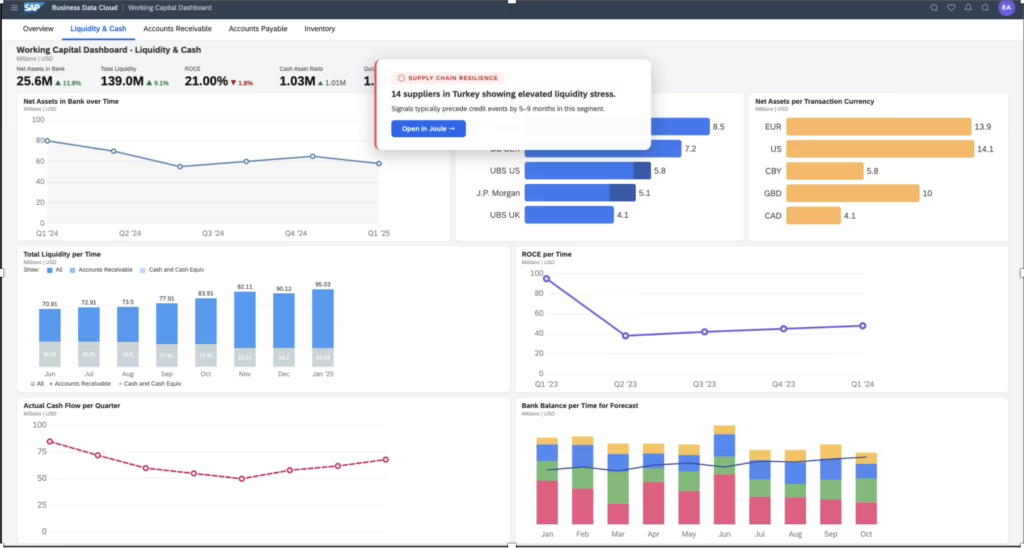
Instead, in the world of Autonomous Finance, Sarah opened her Working Capital Dashboard and turned to Joule.
She did not have to write complex database queries or navigate nested menus. She simply asked Joule to pick up on the cash-gap action items from her morning meeting.
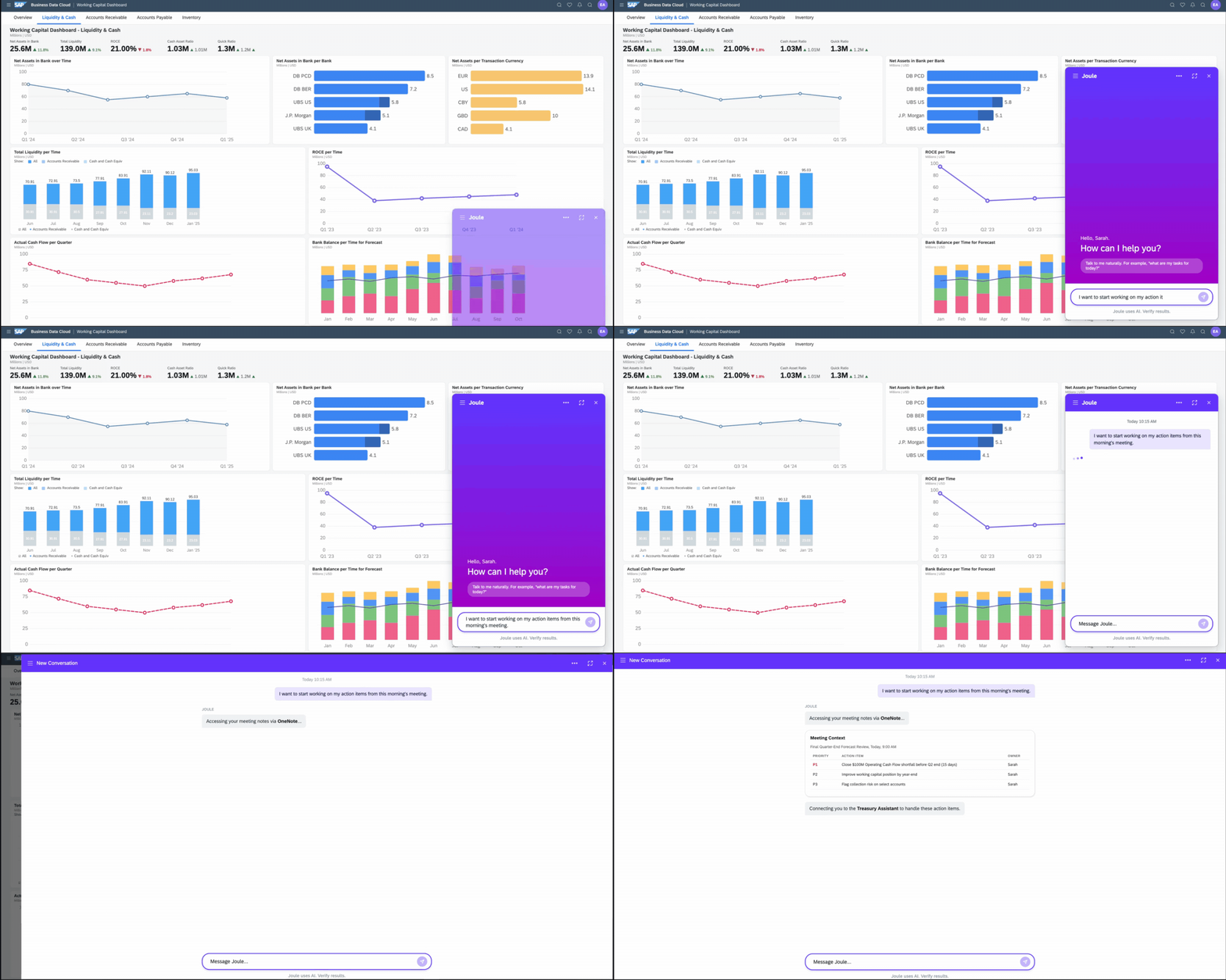
This is where the magic of SAP’s Autonomous Finance architecture begins. Joule, acting as the conversational engagement layer, interpreted her intent and immediately activated the human-facing Treasury Assistant.
The Treasury Assistant verified the $100 million gap against Meridian’s live cash forecasting model systematically:
The Treasury Assistant first mobilized the Cash Positioning Agent to scan real-time bank clearing feeds, subledgers, and collection worklists. By matching unstructured data, the agent discovered a promise-to-pay from Apex Integrated Systems that had cleared the bank just after the morning’s 9:00 AM cash-run. Without Sarah lifting a finger, the agent matched the payment, cleared the open item, and dropped the cash gap to $92 million.
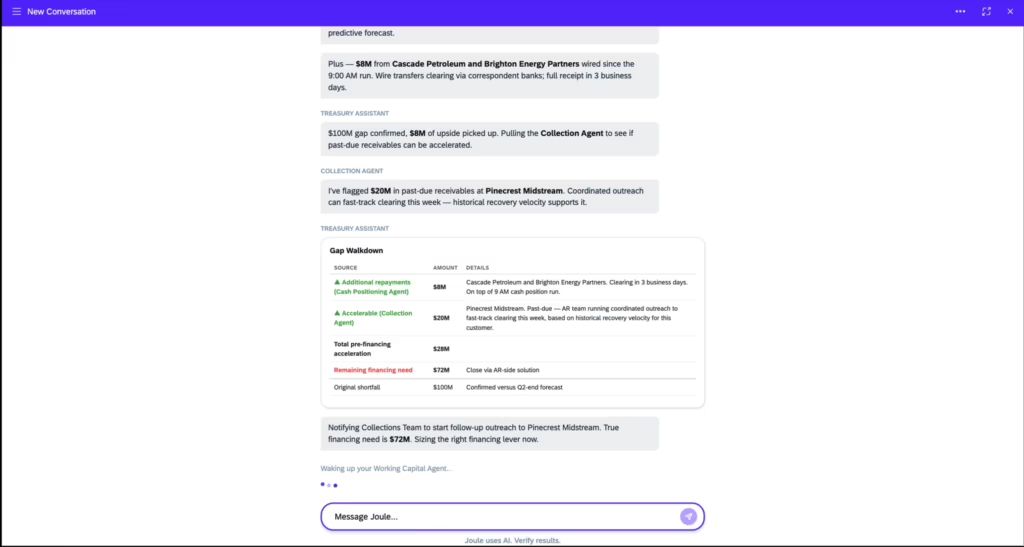
Next, the Treasury Assistant pulled in the Collections Agent to target past-due receivables. But rather than blasting a generic email to every late payer, the agent applied probabilistic reasoning. It analyzed historical payment velocities and customer behavior patterns, identifying that Pinecrest Midstream had $20 million in outstanding invoices that they typically fast-track when prompted.
The Collections Agent instantly drafted and queued tailored, system-to-system payment requests for Pinecrest and automatically Meridian’s Collections team to follow up.
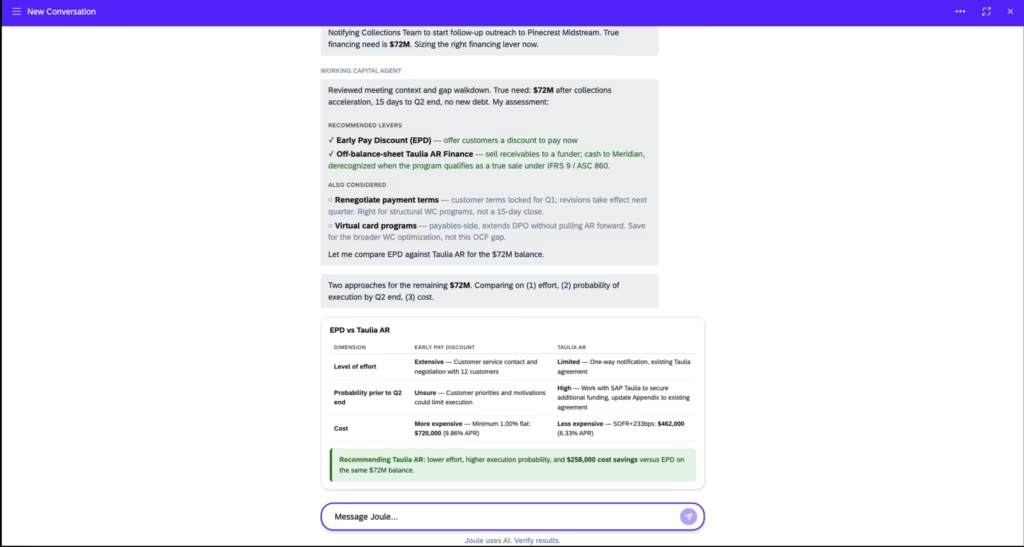
To close the remaining $72 million, the Treasury Assistant summoned the Working Capital Agent. This agent evaluated Meridian’s available financing levers, narrowing down to Early Pay Discounts (EPD) and Accounts Receivable (AR) Finance and then taking it a step further by comparing the two options.
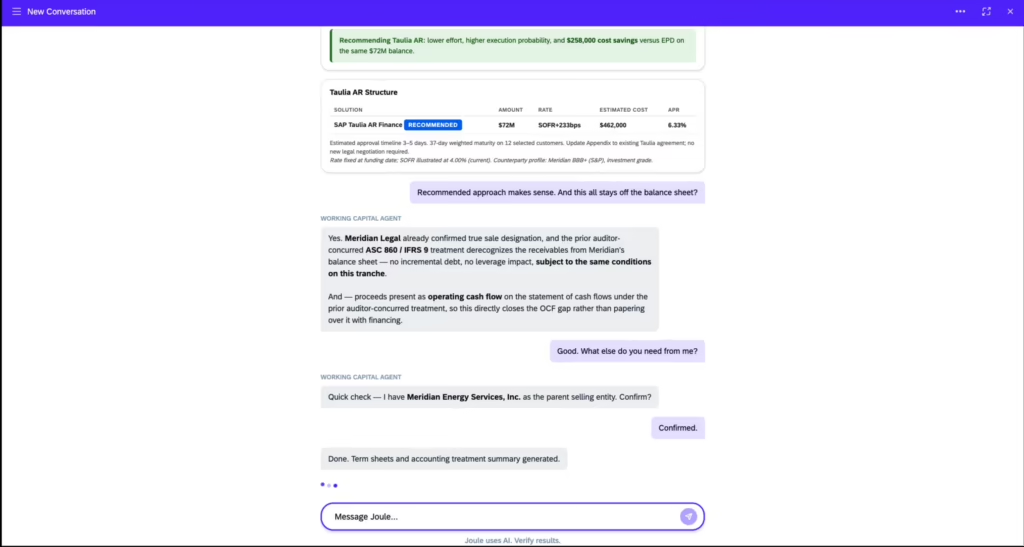
Using live market data, the agent calculated that executing an EPD campaign would cost more and have a lower probability of clearing before the quarter-end deadline. Given the circumstances, the Working Capital Agent recommended routing the remaining $72 million through Taulia AR Finance at SOFR plus 233 basis points—delivering $172,000 in immediate interest savings over the EPD option.
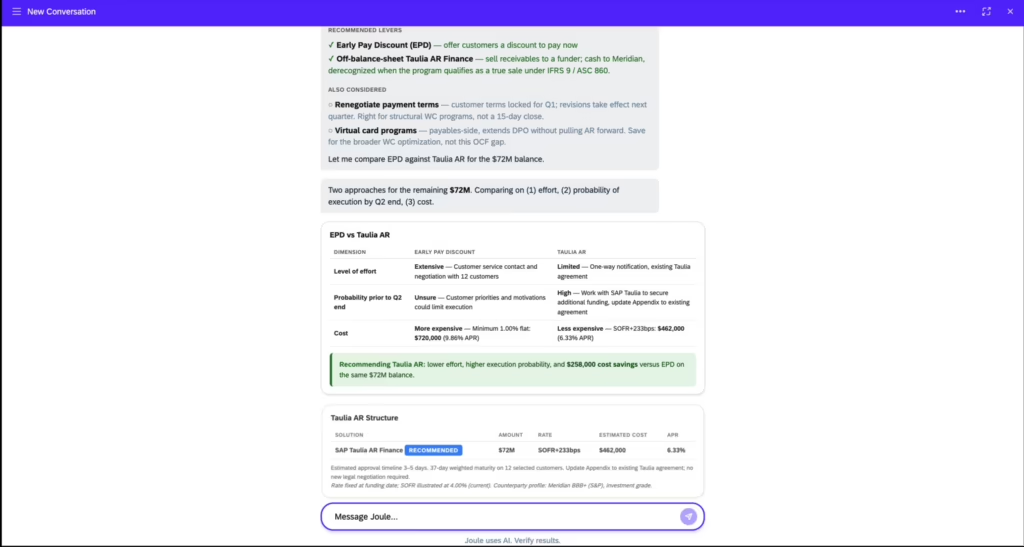
Any experienced Treasurer knows that the moment you suggest AR financing, two massive hurdles appear: Legal and Audit.
Sarah, anticipating the corporate red tape, asked Joule: “Will this transaction qualify for off-balance-sheet, true-sale treatment?”
In a traditional enterprise, this question would trigger a multi-day legal review. Here, the Treasury Assistant tapped into SAP’s semantically rich business data model. It cross-referenced Meridian Legal’s pre-approved guidelines and cited the company’s prior auditor-concurred ASC 860 and IFRS 9 accounting treatment.
The agent confirmed: because this transaction met the exact parameters of their existing banking agreements, it qualified for a true sale. No new legal contracts. No new accounting reviews. Just an automated appendix update to the existing program.
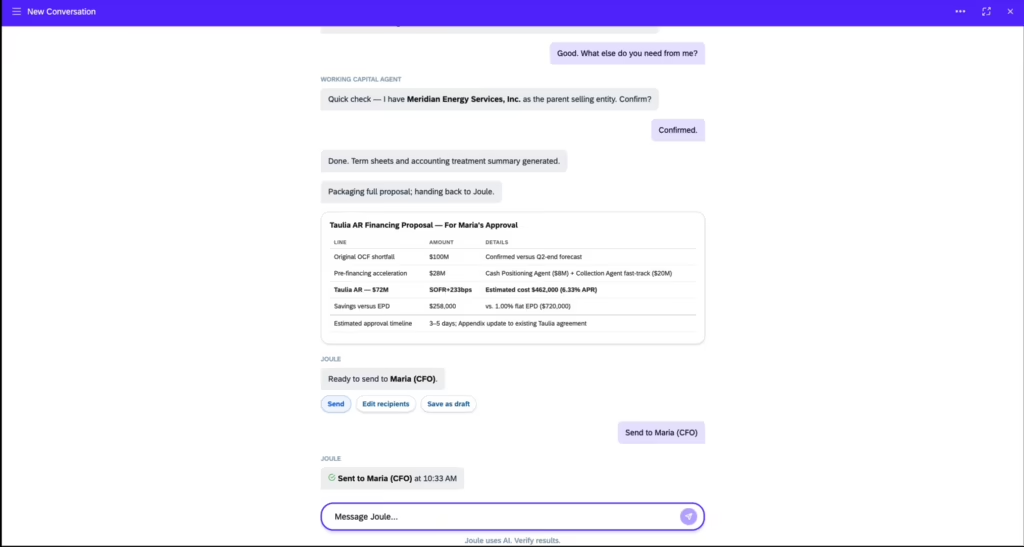
The Working Capital Agent packaged the entire proposal—including live term sheets, compliance verifications, and accounting treatment summaries—and handed it back to Joule, who routed it directly to the CFO’s inbox.
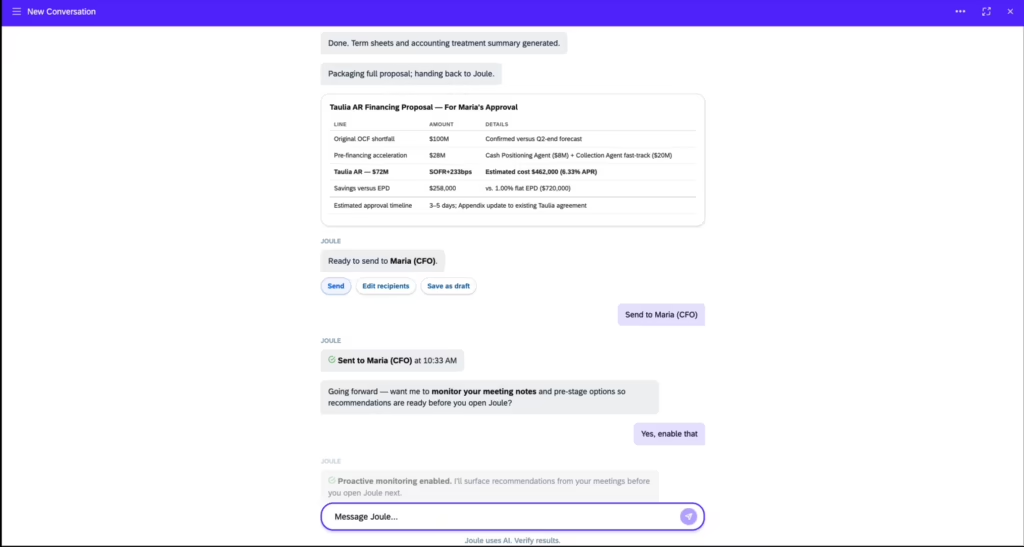
Total time elapsed? Thirty minutes. Sarah did not just find the cash; she delivered a fully auditable, risk-mitigated solution to her CFO before her morning meeting notes were even compiled.
Finally, to prevent scenarios like this from creeping up in the future, the agent asks if Sarah would like to proactively monitor and sets it up in the background once Sarah approves it.
With the quarter-end fire thoroughly extinguished, Sarah shifted her focus from React to Plan. On the last earnings call, an analyst had pointedly questioned Meridian’s cash conversion cycle. The market was watching, and Maria (the CFO) wanted a structural fix.
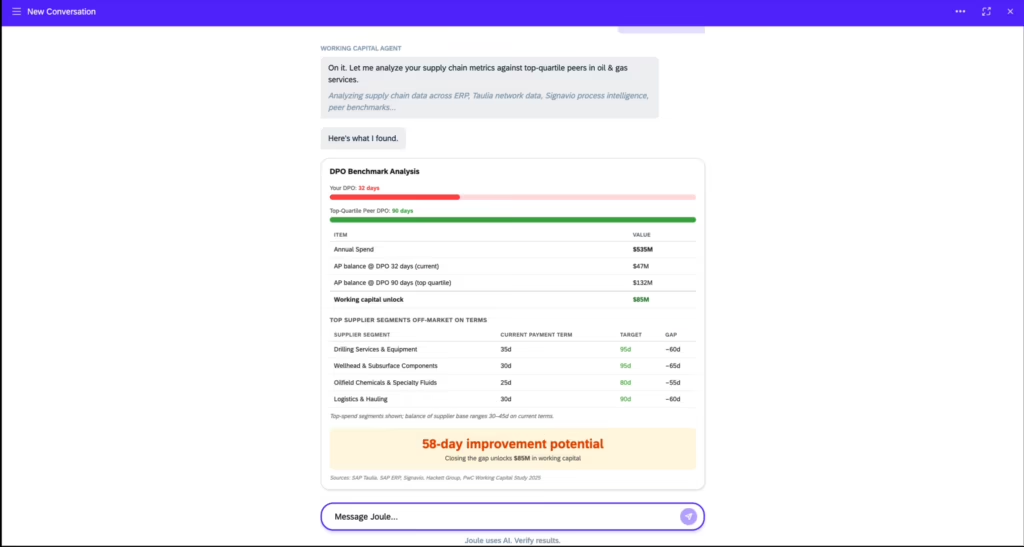
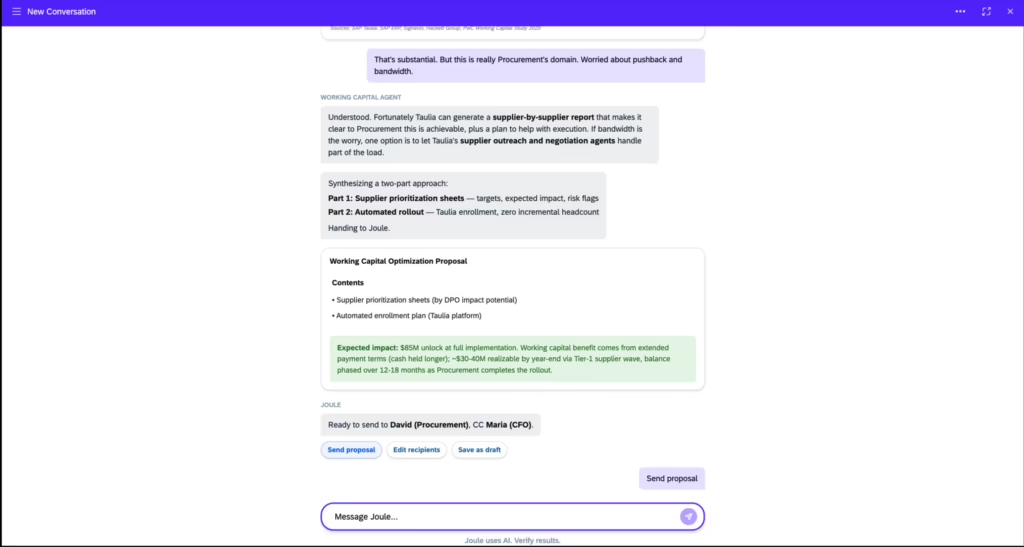
Sarah turned back to her Working Capital Agent to analyze Meridian’s supply chain spend, which runs roughly $535 million annually.
The agent benchmarked Meridian’s Days Payable Outstanding (DPO) against top-quartile Oil & Gas services peers. Within seconds, it identified that Meridian was paying its suppliers 58 days faster than the industry average. That lag represented $85 million in trapped, non-earning liquidity.
The most powerful moment of the day occurred when Sarah did not ask for help.
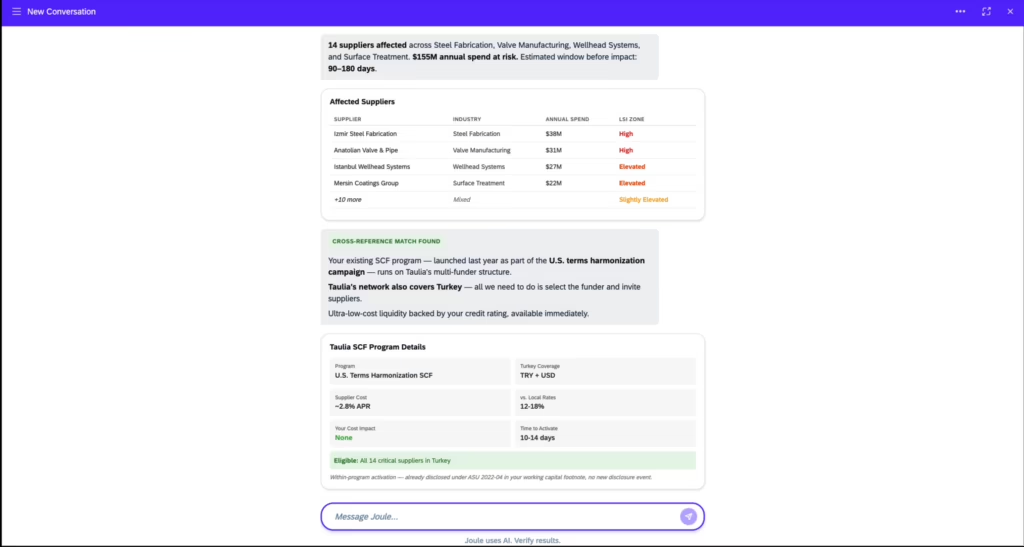
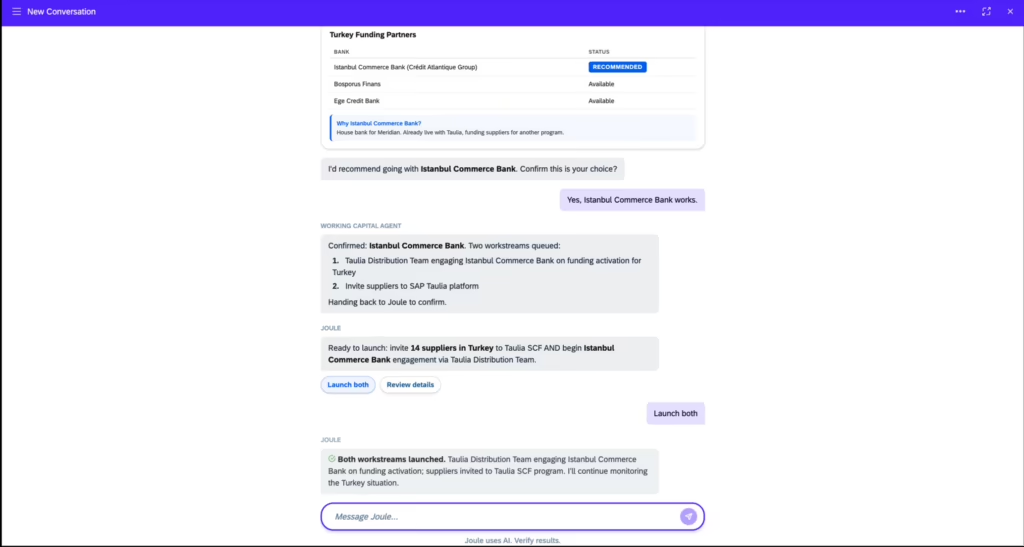
While Sarah was busy optimizing payables, the platform’s Liquidity Stress Index was quietly monitoring global supply chain telemetry. The index detected a subtle, multi-variable shift in payment and transaction behavior across 14 critical suppliers in Turkey, representing $155 million in annual spend. These behavior patterns are leading indicators that typically precede severe supplier credit events by five to nine months.
“To unlock it without impacting supplier relationships, the agent generated:
The system did not just send Sarah an alarming, red-flag notification; it brought her a solution. The Working Capital Agent automatically cross-referenced Meridian’s active Taulia accounts. It recognized that while Meridian’s Supply Chain Finance (SCF) program was originally rolled out for U.S. suppliers, Taulia’s multi-funder structure is global by design.
The agent analyzed local regulatory clearing requirements, evaluated three international funding pathways, and recommended routing early payments to the Turkish suppliers through Istanbul Commerce Bank—specifically identifying it because it is Meridian’s local house bank in the region.
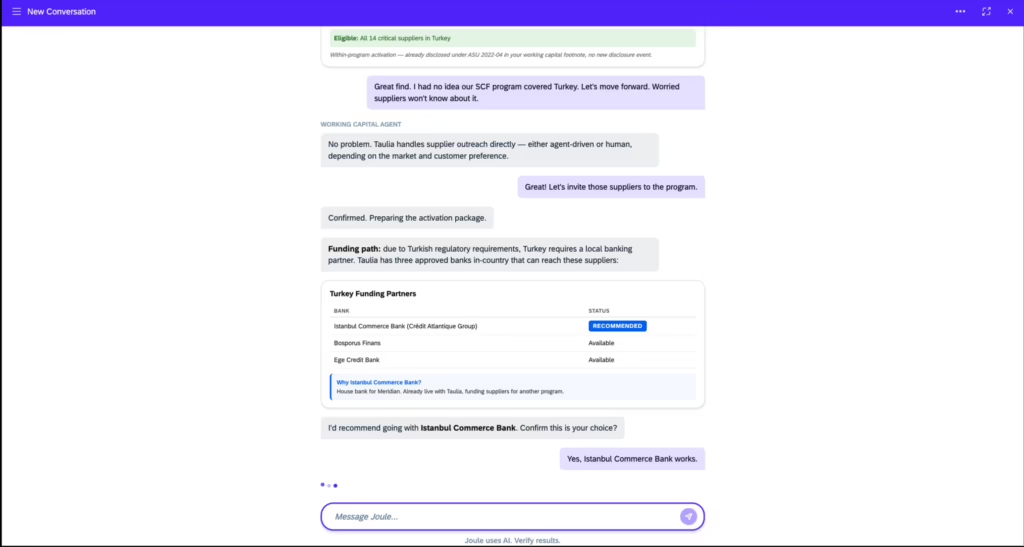
With two clicks, Sarah authorized the agent to engage Istanbul Commerce Bank and invite the Turkish suppliers to the SCF platform. She protected $155 million in critical supply chain capacity before the risk ever materialized on her radar.
When the dust settled on Sarah’s morning, she had:
This is the power of the Autonomous Enterprise. When your AI assistants and execution agents share context, process rules, and data natively within the SAP core, their value compounds. You stop wasting your days chasing invoices and arguing over Excel formulas, and you start acting as an architect of enterprise value.
And frankly, that sounds like a much better way to spend your morning.
See what 30 minutes can do for your quarter-end. Schedule a live demo.

Expert Advice
Everything you need to know about digital supply chain management, including a definition and a summary of the key benefits.

Expert Advice
Accounts payable automation software enables easier management of invoicing and payment processing through a single digital platform.

Expert Advice
Over the last decade, there has been explosive growth in the range of digital working capital management solutions that are…